STEM Education Nonprofit - Google Ad Grant Case Study
Introduction
This nonprofit runs STEM programs for high school students. Its residential summer program runs on college campuses, and it has also offered a virtual program and online courses.
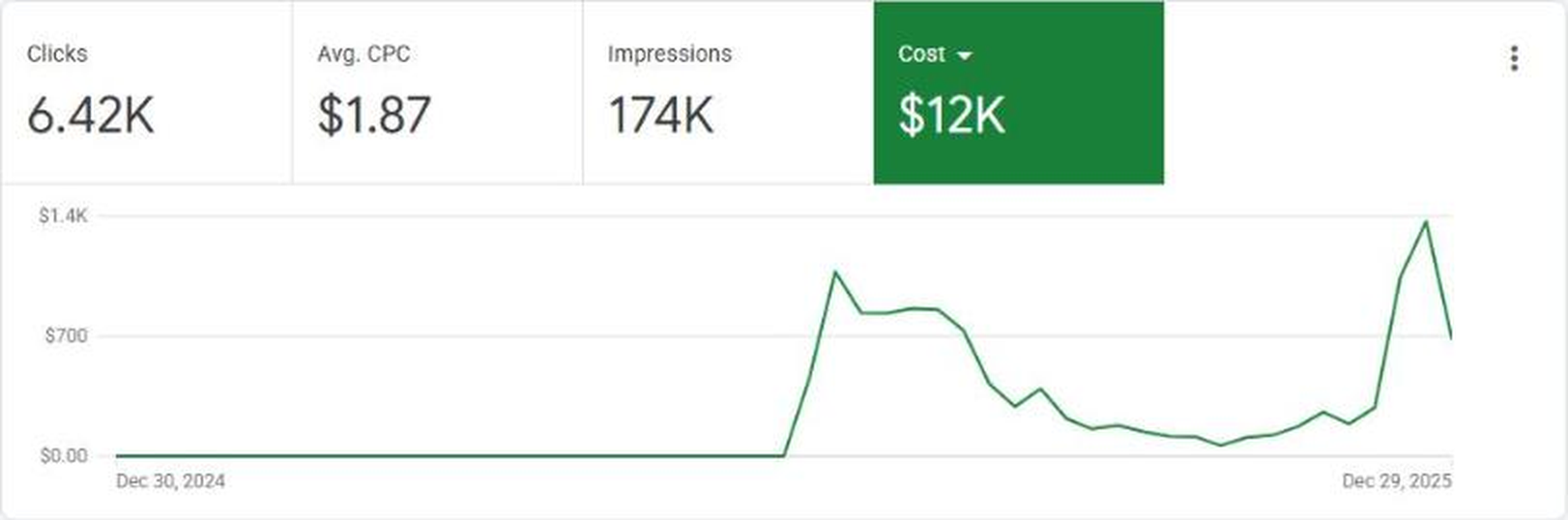
It had a Google Ad Grant, but the grant was barely being used. In all of 2025 the account spent about $12K, under $1,000 a month. It spent nothing from January through June, and after campaigns restarted in July, monthly spend slid back down to a few hundred dollars by October before picking up again in December:
Google Ad Grant Goals
The nonprofit wanted to use the Google Ad Grant to:
- Use the full $10,000 a month, then improve the quality of that traffic
- Reach high school students in the US looking for STEM summer programs, including the ones who haven’t heard of the program yet
- Send more students to the residential program interest list, which became the main goal
Overall Results
The first thing we did was fix the conversion tracking. The account’s only conversion was labeled as a lead form, but it fired whenever someone opened the About page. It gave Google something to chase, but it didn’t tell the nonprofit anything. We replaced it with a conversion dashboard that tracks clicks to the residential program interest list, the virtual program, scholar applications, online courses and inquiry emails, so every campaign was judged on real steps toward a program.
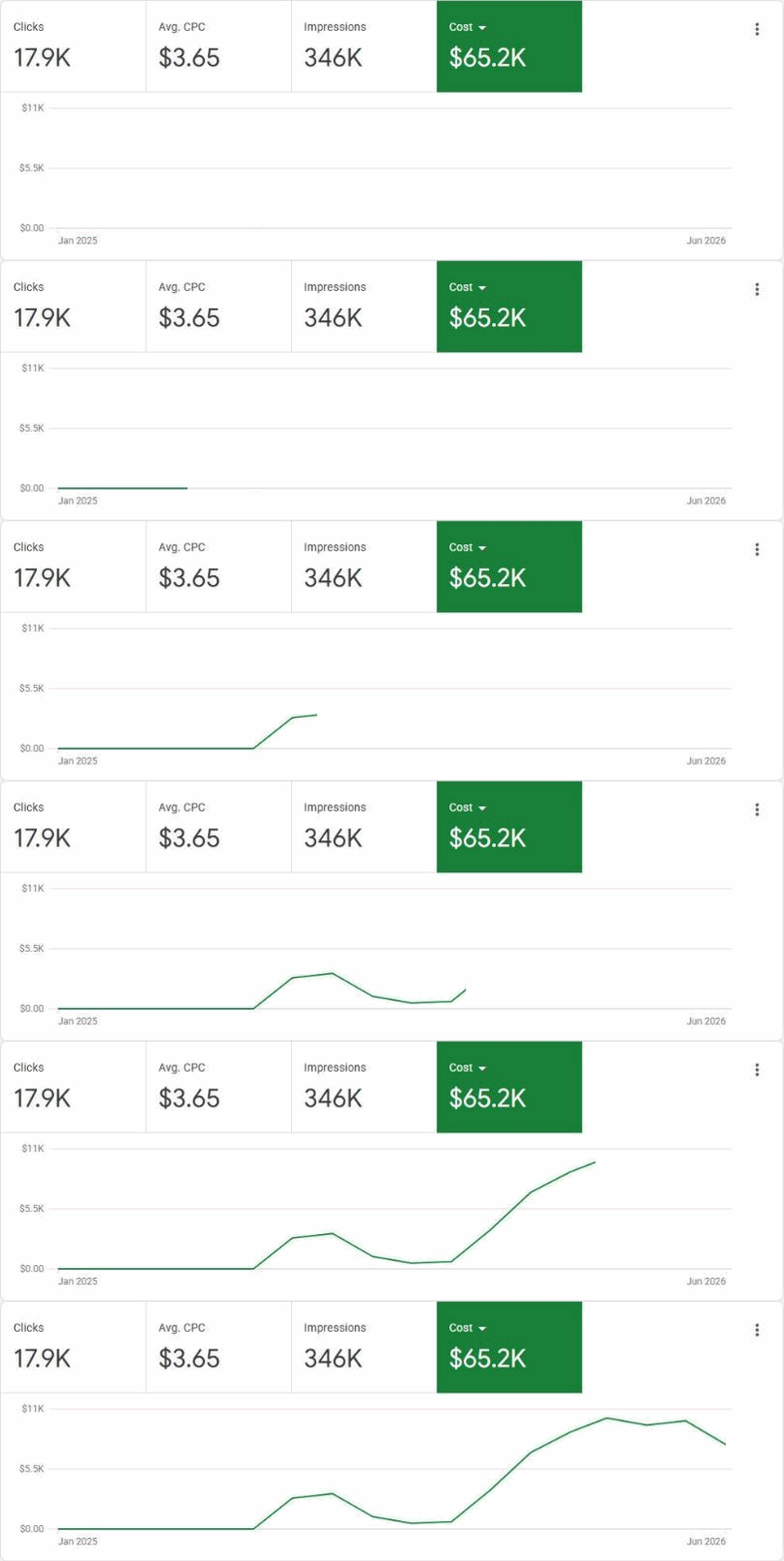
Spend had started to climb in December and January, but almost all of it came from one Performance Max campaign chasing that About page conversion, and most of the clicks came from outside the United States. Our management started in February 2026, and within the first week of new campaigns the account was spending the daily maximum. It held there through May:
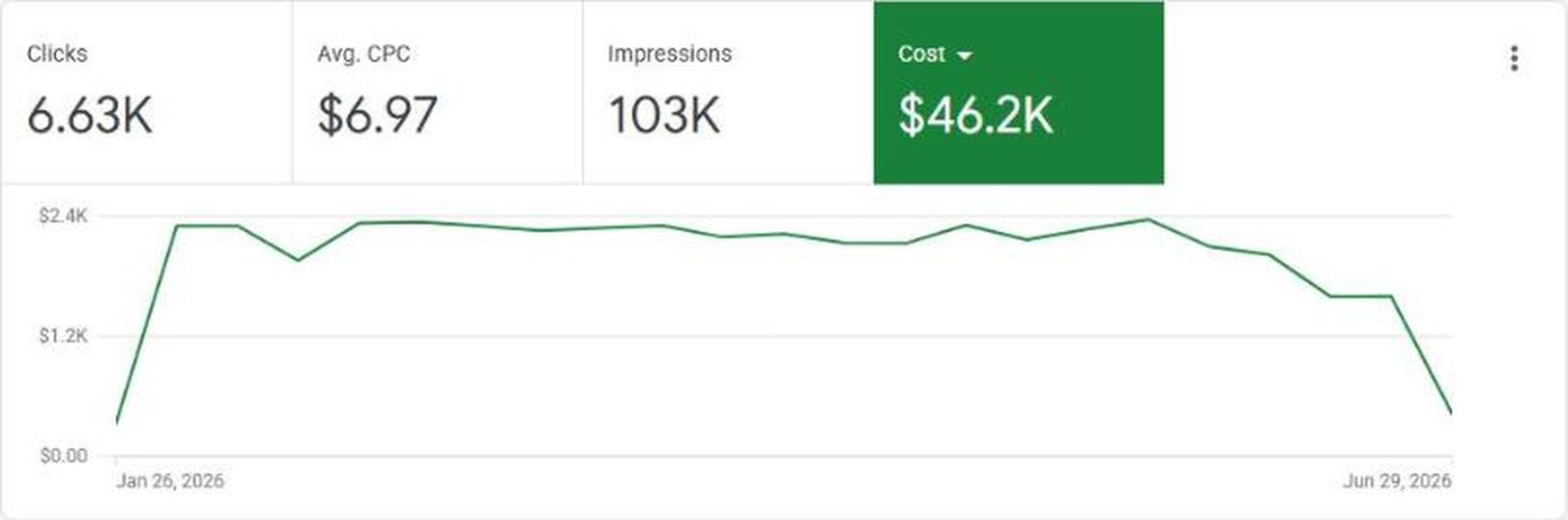
From February through June 2026, our five months managing the account, the nonprofit used $46.2K of the grant, at the daily maximum almost every week through May. That’s about $9,200 a month, more than nine times the 2025 average:
Over those same five months the grant drove 166 clicks to the residential program interest list and more than 160 to the virtual program, over 330 in total:

Process and Strategy
Let’s explain how we did it.
Casting a Wide Net, Then Tightening It
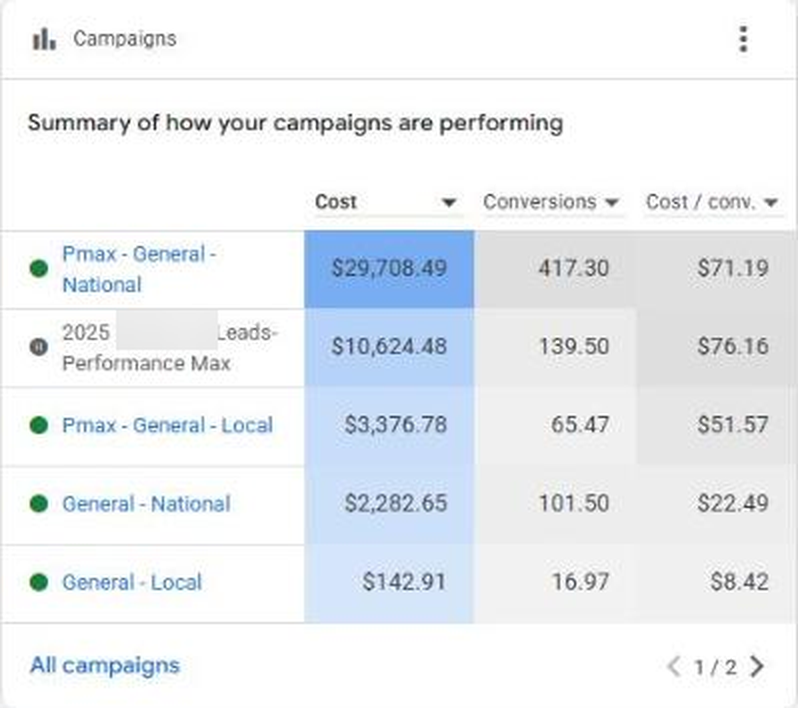
Almost all of the old account’s spend ran through one Performance Max campaign, and it had fixated on Python searches. We built new campaigns targeted to the United States, a search campaign and a Performance Max campaign, with ad groups for STEM summer programs, STEM courses, computer science courses and engineering camps, plus dynamic search ads and the organization’s brand. In April we added a local pair of campaigns aimed at specific states.
The plan was to cast a wide net first so the account hit the full grant, then focus on quality. Once the new campaigns were carrying the spend, we paused the old ones a little at a time. You can see the new campaigns taking over from the old Performance Max campaign:
Keeping the Grant in the United States
The nonprofit serves students in the US, but before February most of the clicks came from other countries. In December and January, India sent 1,629 clicks and the United States only 545 out of 6,680:
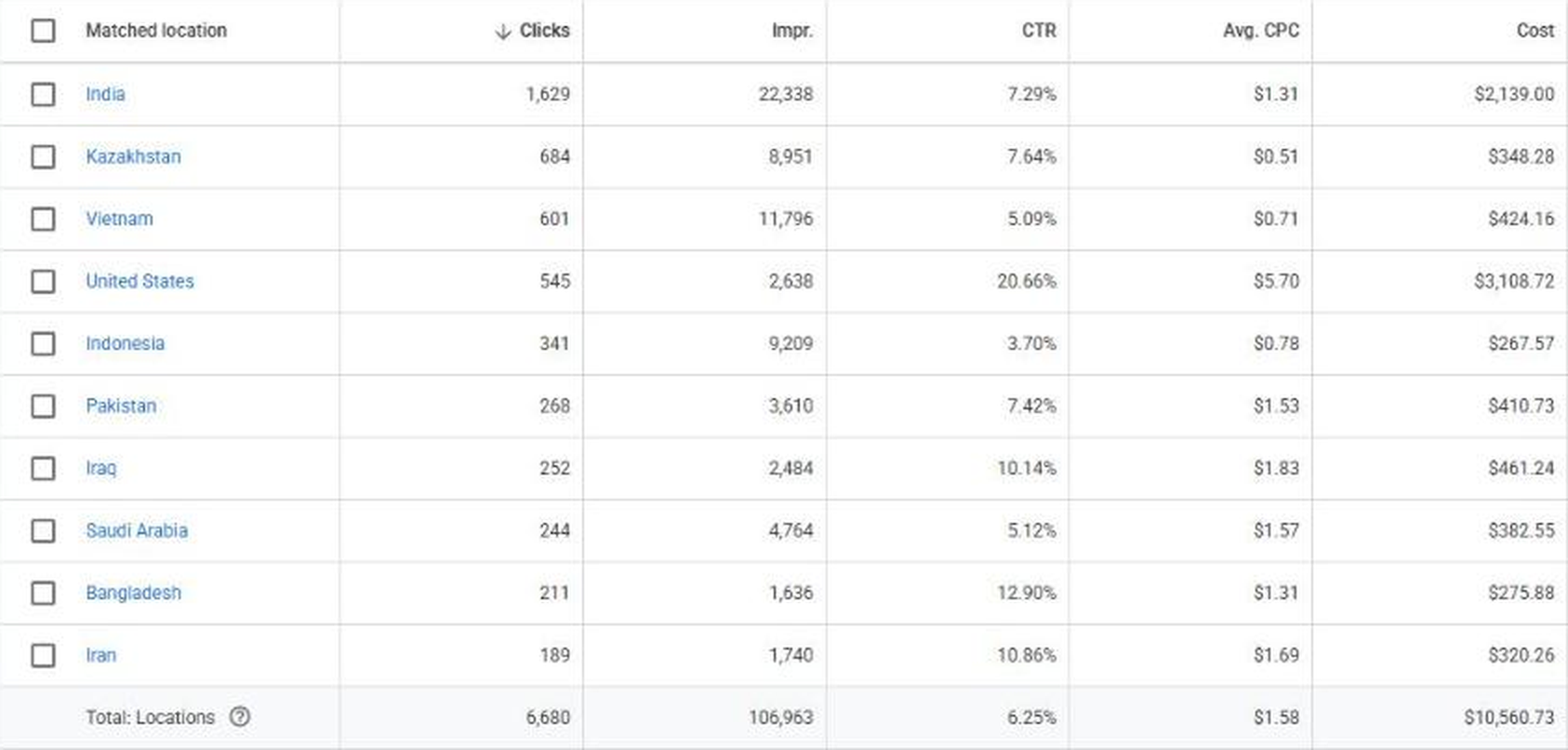
The new campaigns target only the United States, and as the old campaign wound down, the traffic followed. From March through May, the location report matched all 2,176 clicks to the United States:

Letting Search Terms and Conversions Guide the Account
Once the account was at the full grant, we couldn’t add more spend, but we could get more out of it. Two things guided every change: the quality of the search terms and the conversions they led to. A search like “STEM summer programs” that turned into a click to the residential program is exactly what we wanted more of.
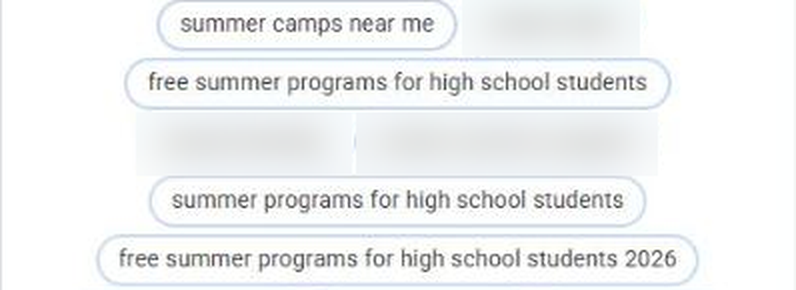
Besides the organization’s own name, the searches bringing people in came from people looking for summer programs for high school students:
We also valued a residential program click well above every other conversion and set the search campaigns to bid for conversion value, so Google pushed for residential interest instead of cheap clicks. In April, spend dipped slightly from March, but residential program clicks went up.
Moving Forward
June 2026 was our last month managing this grant, and we used it to set the account up to stay as stable as possible without active management. In five months the grant went from under $1,000 a month to close to the full $10,000, and its traffic went from Python searches overseas to people in the US searching for the organization and for STEM summer programs.
If your nonprofit has a Google Ad Grant that is barely spending, there are more ways to put it to work than most accounts ever try, and you can see how we approach Google Ad Grants for education nonprofits. You can work with Digital Tabby to manage your Google Ad Grant and it all starts by booking a call.