Global Policy Network - Google Ad Grant Case Study
Introduction
This client is a global network of independent think tanks and policy nonprofits, and we’ve kept them anonymous here. Everything below is from their live Google Ad Grant account. Alongside grants, training and regional events for the organizations in its network, the client publishes articles on what is happening in the countries where its partners work, plus a print magazine.
They also have something most nonprofits don’t: a Google Ad Grants Pro account. Google Ad Grants Pro raises the monthly budget from $10,000 to $40,000.
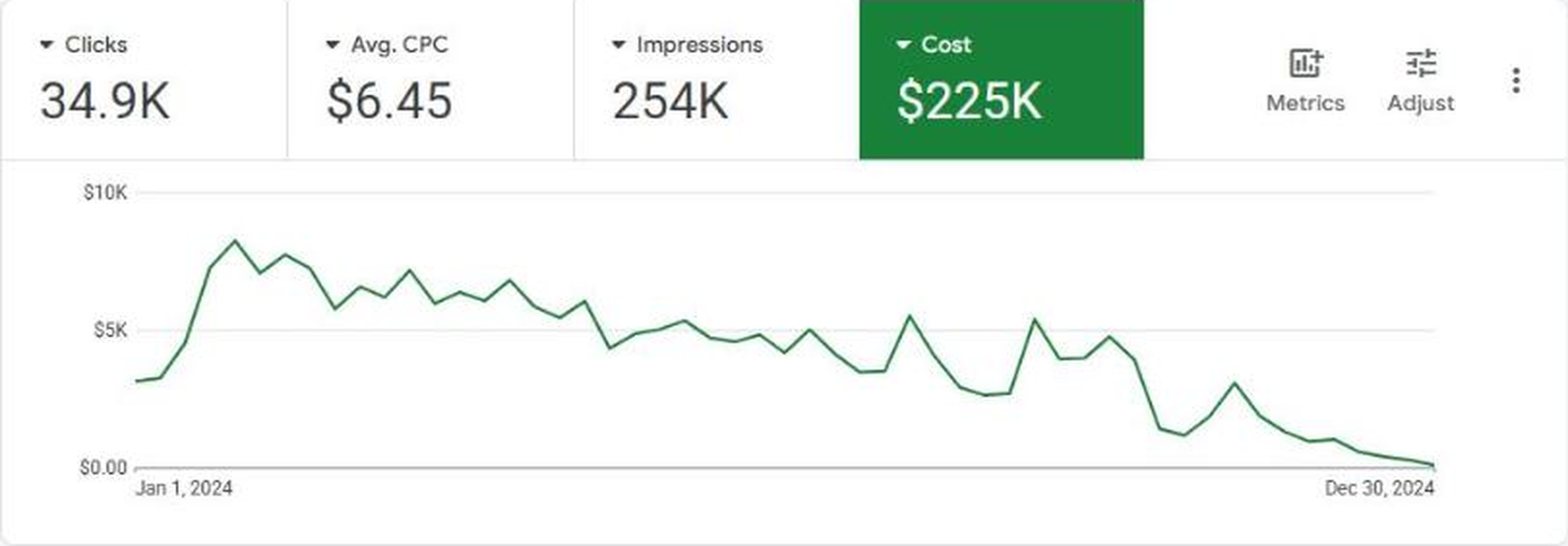
But the grant had been fading. Earlier management kept it spending with searches that brought in people who weren’t the organization’s audience, and then the account was left alone. In 2024 it used $225K, less than half of the $480K available, and the line kept sliding all year until it had almost stopped by December:
Google Ad Grant Goals
The organization wanted to use the Google Ad Grant to:
- Reach the right people, not just anyone, so the grant stops paying for clicks from searches their audience doesn’t care about
- Grow their own audience: email subscribers and readers of their magazine, which they see as the best welcome mat to the organization
- Show up when people search for what is happening in a country where their network is active, like Venezuela
- Fill their events, the regional forums they hold around the world
- Use the full grant every month, in a way they could show was a smart investment
Overall Results
The first thing we fixed was conversion tracking. When we started, the only actions being tracked were a button click on one page and time on site. We rebuilt it so the account now tracks what matters to the organization: magazine and resource downloads, donation clicks and completed donations, event clicks, applications, contact forms and newsletter sign-ups.
Then we built new campaigns alongside the old ones, so spend never dropped to zero while we switched over, and grew the account month by month until it reached the cap in August 2025. Here’s the whole turnaround, from a year of sliding to the full grant:
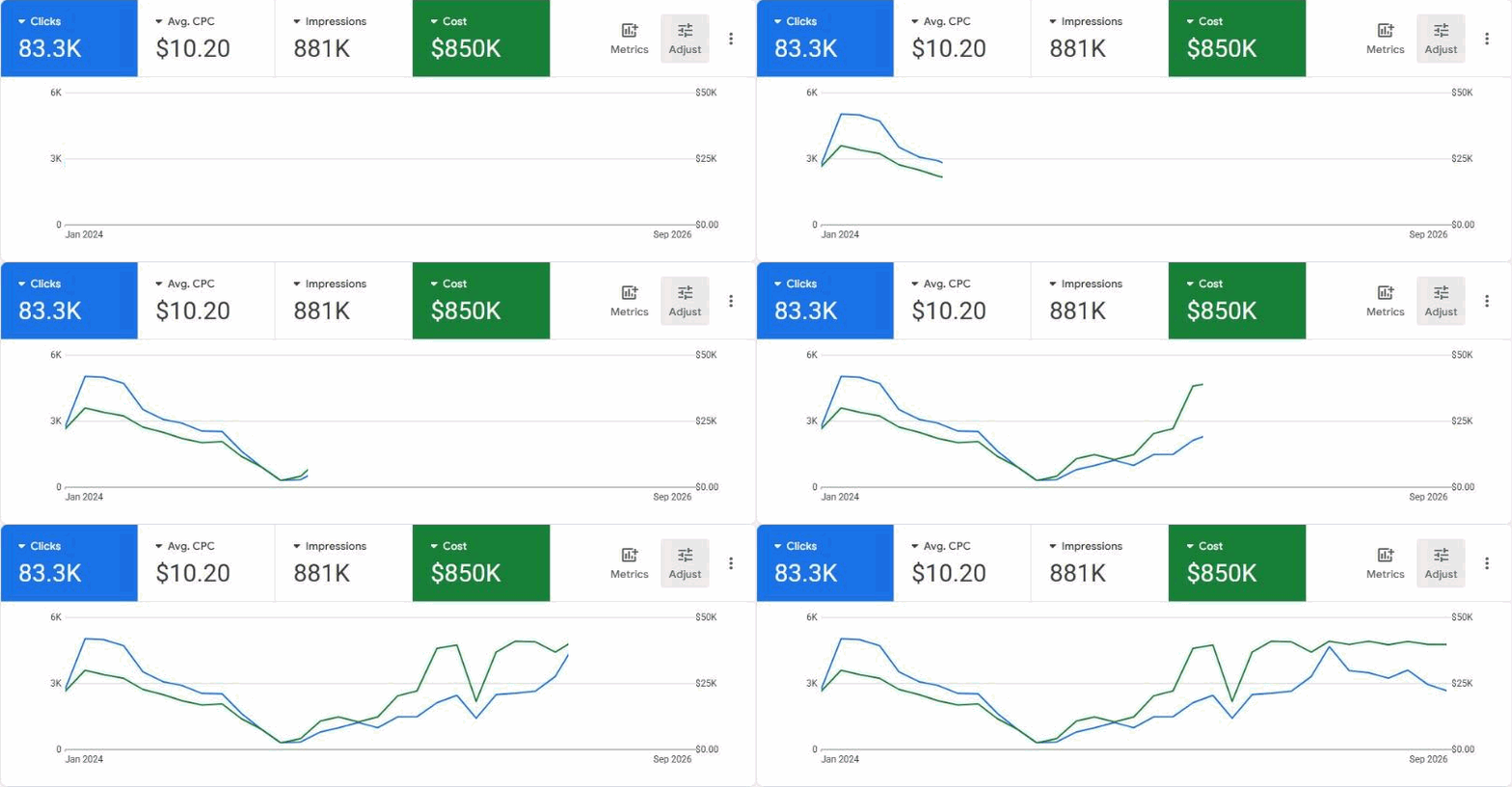
The one dip, in October 2025, came from a website issue that stopped Google from showing the ads for part of the month. Once it was fixed, spend went straight back to the cap.
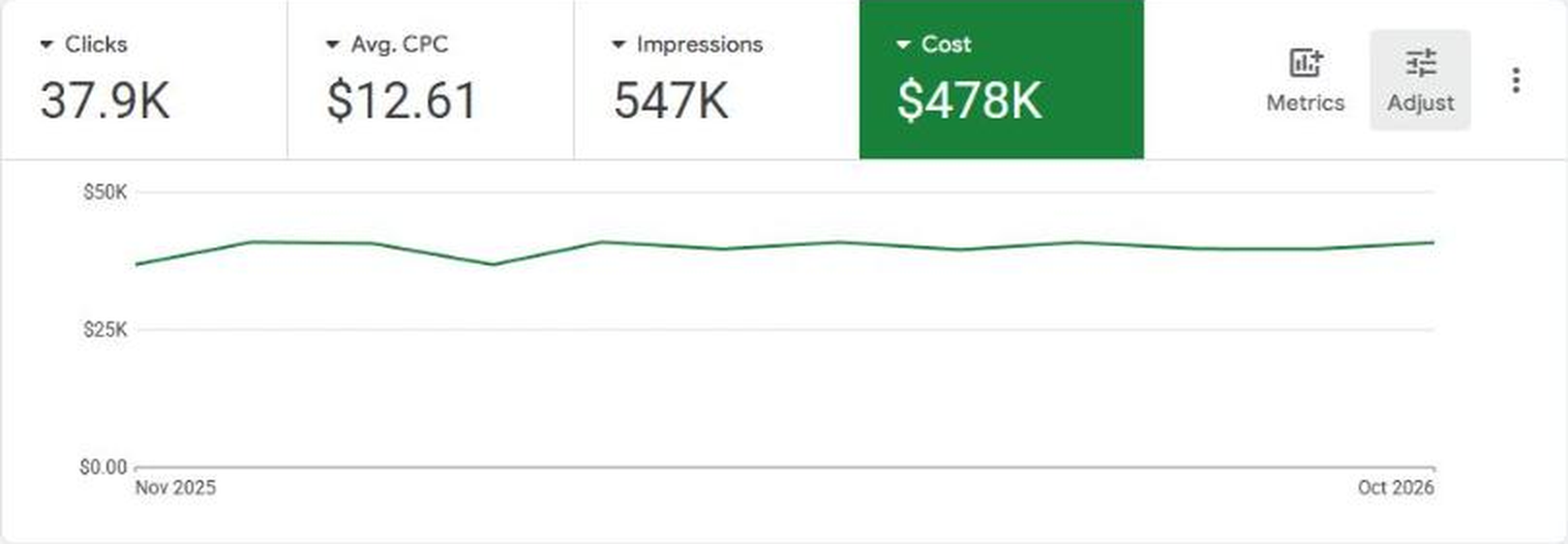
It has stayed there. From November 2025 through October 2026 the account used $478K of a possible $480K, more than double the $225K it used in 2024:
The grant also brings people further into the organization’s world. In April 2026 we added tracking for every form on the site, apart from event notifications and magazine subscriptions, which have their own conversions. Since then the grant has driven 162 form submissions:

Process and Strategy
Let’s explain how we did it.
Starting Fresh Instead of Patching
The old account was split into many small campaigns, still ran an ad format Google stopped letting anyone edit in 2022, and carried a long list of policy issues. Fixing it piece by piece would have taken longer than starting over. So we built a new structure, split only where the audience or location really changes, and let the old campaigns run until the new ones were ready to take over.
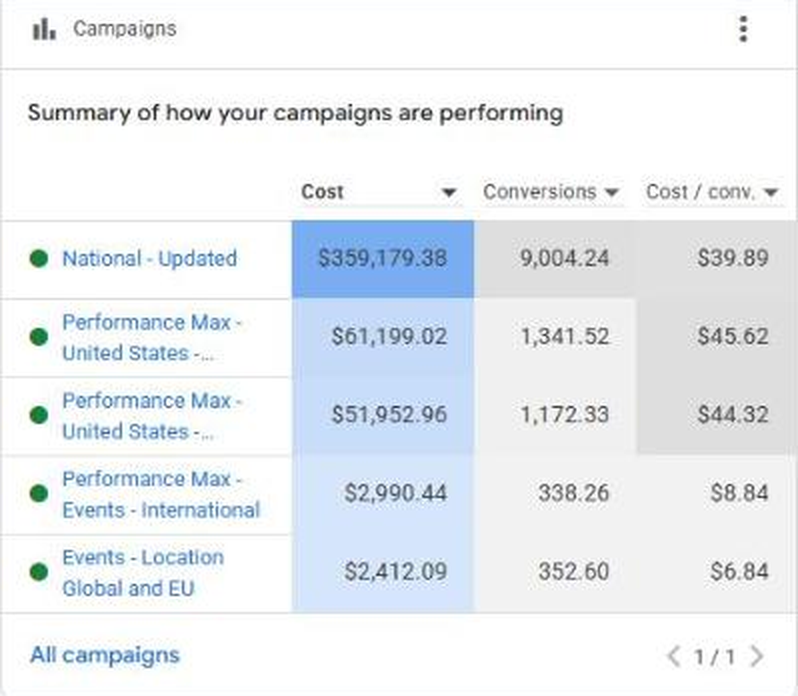
Today one national search campaign carries most of the grant, with Performance Max campaigns for articles and broader reach, and dedicated campaigns for events:
Following the News People Already Search For
The organization publishes a steady stream of articles about specific countries, so we let the searches show us where to go. Early on we cast a wide net with dynamic search ads, which let Google match the site to searches on its own. Searches like “articles about venezuela”, “what is happening in europe” and “north korea human rights” kept coming back, each one tied to a real article or regional hub on their site. We gave those topics their own ad groups with ads written for that page, and we add new ad groups whenever new content goes up.
We also suggested content back to their team, like country hubs that collect every article on one place, so a search for what’s happening in Venezuela lands on a page that answers it.
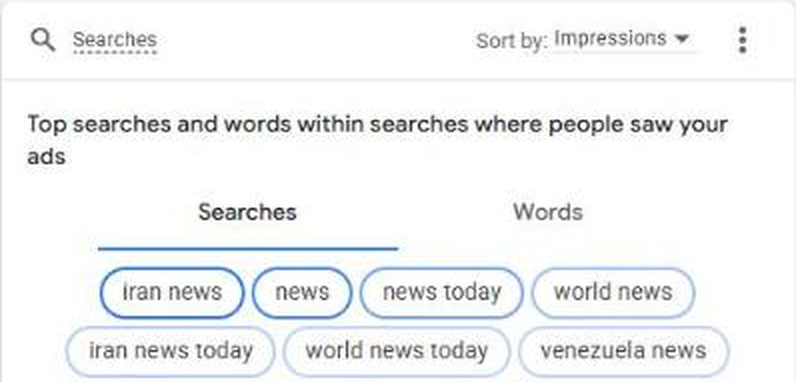
The result is an account that shows up for news and world affairs searches, right where the organization’s audience is looking:
Giving Google Something to Learn From
By spring 2025 spend had stalled. News searches alone didn’t give Google enough conversions to learn from, so in June 2025 we added an engagement conversion: a visitor who stays on a page for 60 seconds and scrolls 60% of the way down. It isn’t a goal for the organization on its own, but it showed Google’s bidding who actually reads the articles. Spend jumped that month and kept climbing until the account hit the cap.
Moving Forward
The grant went from a year of sliding to using nearly every dollar of its $40,000 a month, on searches from people interested in world affairs. With spend handled, the focus now is turning more of that traffic into meaningful conversions: more form submissions, more magazine readers and more people at their next forum, plus content on the bigger questions people research before they’ve heard of the organization.
If your organization has a Google Ad Grant that isn’t spending, there are more ways to put it to work than most accounts ever try, and you can see how we approach Google Ad Grants for policy organizations and think tanks. You can work with Digital Tabby to manage your Google Ad Grant and it all starts by booking a call.