Food Access Nonprofit - Google Ad Grant Case Study
Introduction
This client is a food access nonprofit, and we’ve kept them anonymous here. They work to make healthy food easier to get across their state. They run farmers markets, run a statewide program that helps people using SNAP get twice the fruits and vegetables, support local farmers and teach cooking classes. Everything below is from their live Google Ad Grant account.
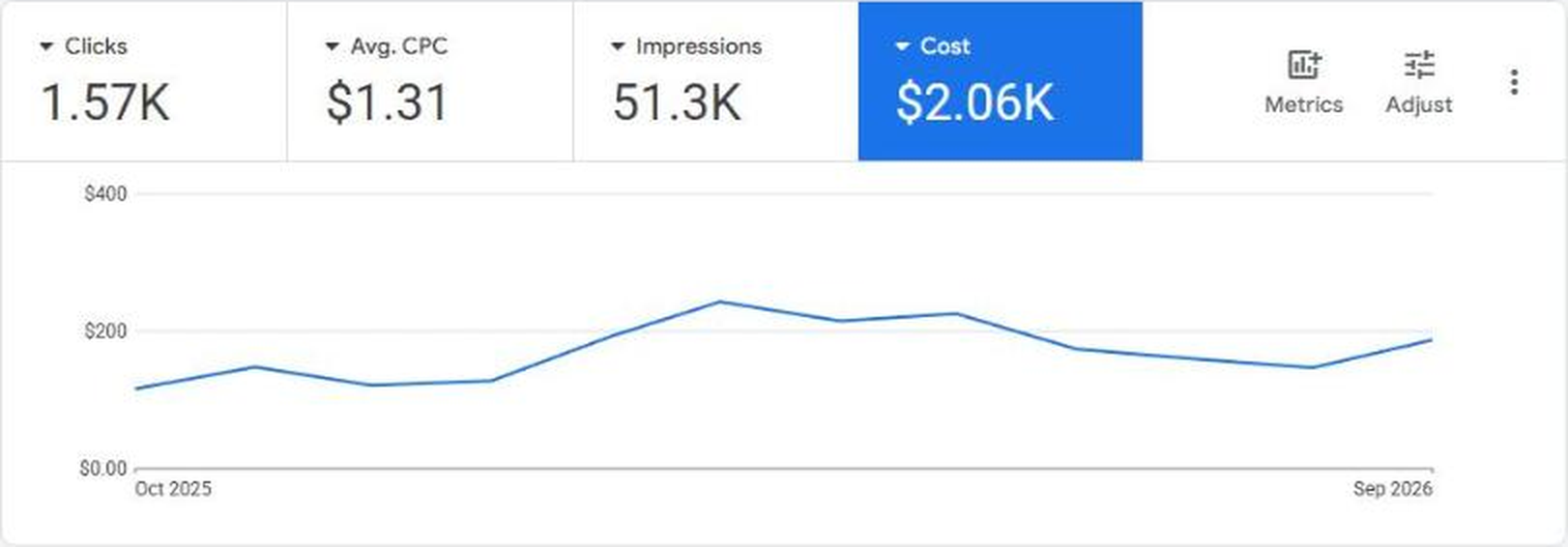
They had a Google Ad Grant, but it was barely being used. Nobody on the current team had a login to it anymore, so campaigns set up years earlier, some as far back as 2015, kept running on their own. In the 12 months before we started, October 2025 through September 2026, the account used just $2,059 of a grant worth up to $10,000 a month, and it wasn’t tracking the things the nonprofit cares about, like newsletter sign-ups, donations or visits to their SNAP produce program:
Google Ad Grant Goals
The nonprofit wanted the grant to work for the whole organization, not only one program. The goals:
- Make more people who use SNAP aware of their produce program, so their benefits go further on fruits and vegetables
- Bring more people to their farmers markets
- Promote the rest of their programs too, from food access resources to cooking classes
- Turn that traffic into newsletter sign-ups, people getting involved and donations
Overall Results
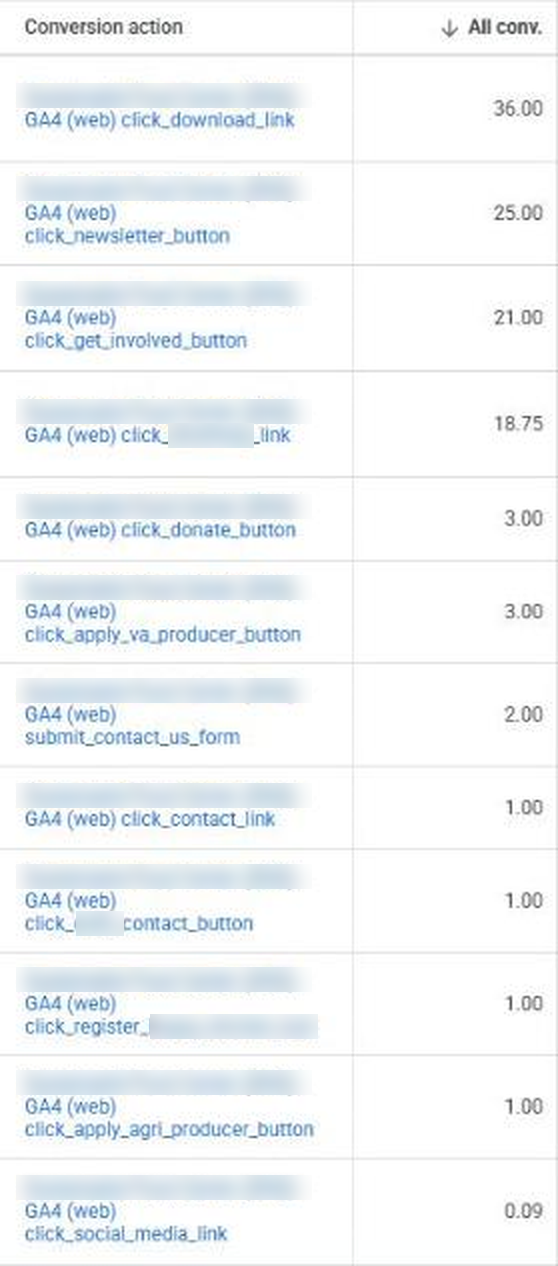
The first thing we built was conversion tracking. Their conversion dashboard tracks newsletter sign-up clicks, Get Involved clicks, donate button clicks, contact form submissions, producer application clicks and clicks through to the SNAP produce program, so every campaign is judged on what people do once they reach the site.
We launched new campaigns on October 6. Conversions started coming in the next day, and spend climbed with them. On November 10 the account hit the $329 daily maximum, the most the grant can spend in a day, and it stayed there every day through November 14:
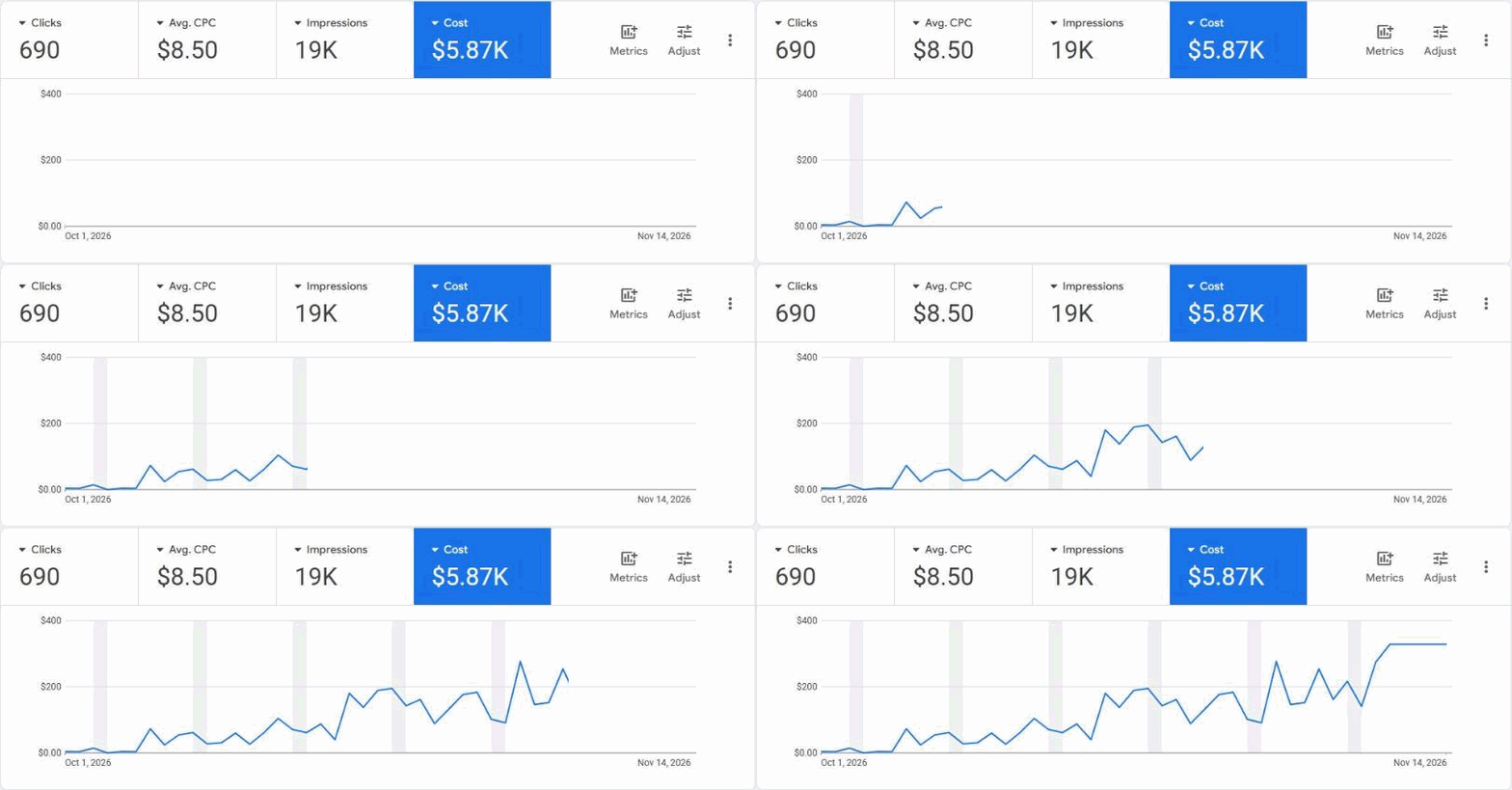
In those first 45 days the account used $5,866 of the grant, nearly three times what it used in the entire year before.
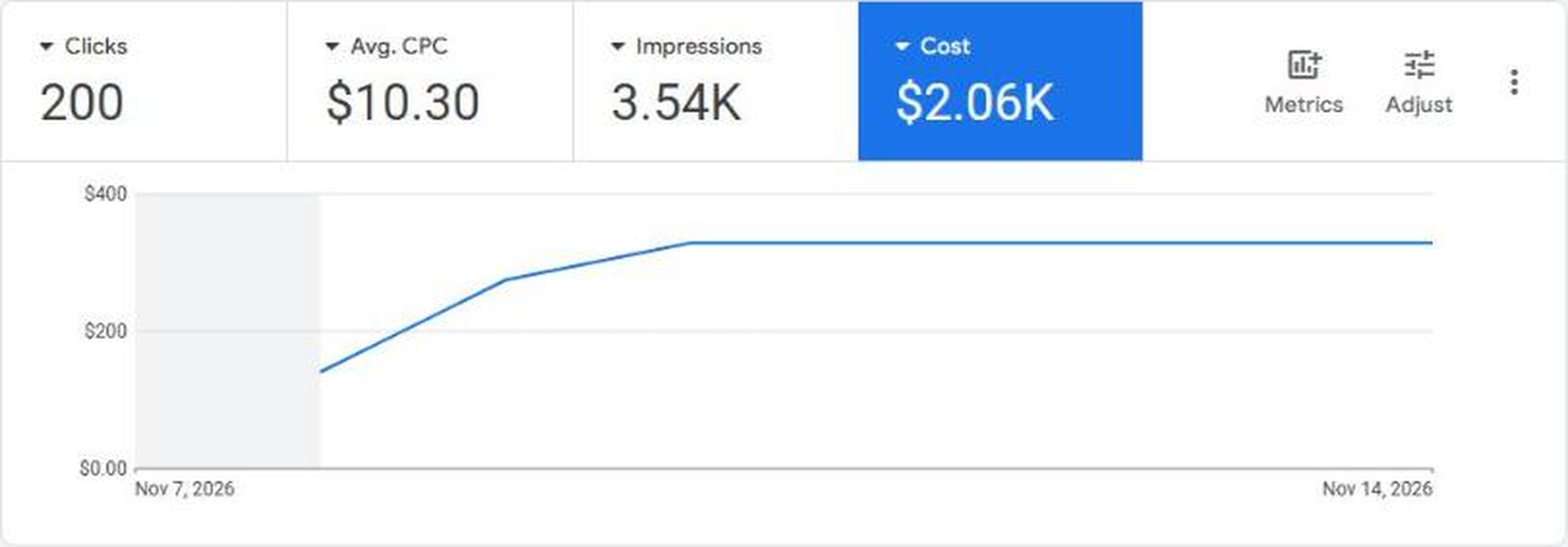
The pace now is the real story. In the week of November 8 to 14 alone, the account used $2,060, as much as it used in the whole year before we started:
The grant is also sending people to the actions the nonprofit cares about. In the first 45 days it drove 25 clicks on the newsletter sign-up button, 21 Get Involved clicks, 3 donate button clicks and 2 contact form submissions, plus visitors clicking through to the SNAP produce program:
Process and Strategy
Let’s explain how we did it.
Conversions First, Then Spend
A grant account spends more when Google can see results. So before pushing for spend, we made sure the account could see the actions that matter to the nonprofit. Once those conversions started coming in, spend went up with them, from a few dollars a day to the $329 daily maximum in five weeks.
One Strategy for the Whole Organization
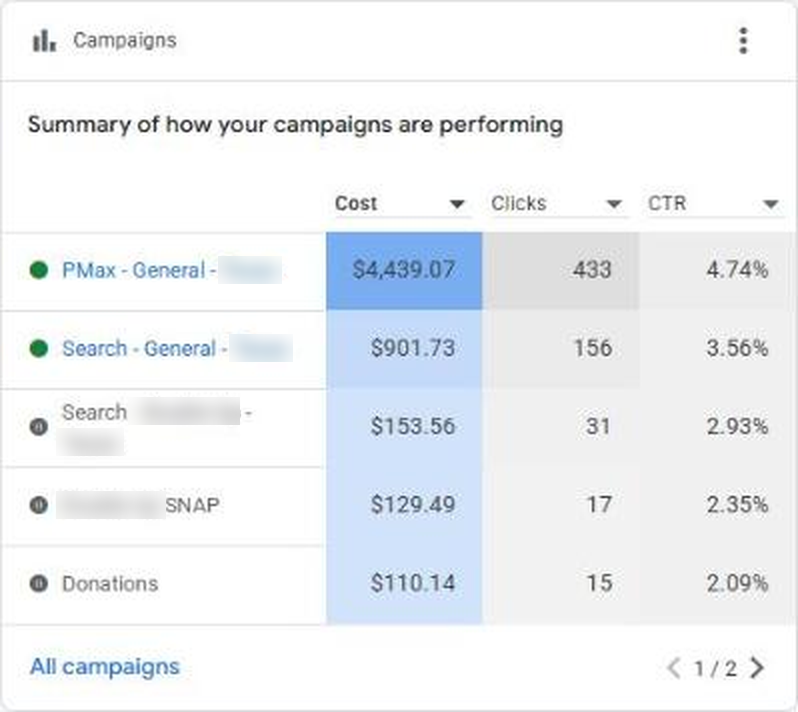
The SNAP produce program was a big part of why they brought us in, but they wanted the grant to promote the whole organization. So we replaced the old campaigns with a new structure built around their programs: a general search campaign with ad groups for farmers markets, food access and the nonprofit by name, campaigns for the SNAP produce program and WIC, and a Performance Max campaign. Every new campaign targets their state only, since that’s where their programs run.
Farmers Markets and SNAP Searches
We built around what people in their state already search for. Farmers market searches picked up fast, from searches for a farmers market in their city to searches for specific neighborhood markets, and searches for the SNAP produce program by name bring people straight to it. For people who don’t know about the program yet, we target searches like SNAP benefits and places that accept SNAP, so they find out their benefits can go further on fruits and vegetables.
Right now the page the grant sends the most people to is their statewide food access resource list for the federal government shutdown.

Moving Forward
In five weeks from launch, the account went from a grant nobody could log in to, to the full daily grant. The next step is to keep it at $329 a day and make it more efficient: more newsletter sign-ups, more people getting involved and more visits to the SNAP produce program for the same spend, plus content for searches across the whole state, where there is far more search volume than their local farmers markets alone.
If your food bank or food access nonprofit has a Google Ad Grant that isn’t spending, there are more ways to put it to work than most accounts ever try, and you can see how we approach Google Ad Grants for food banks. You can work with Digital Tabby to manage your Google Ad Grant and it all starts by booking a call.